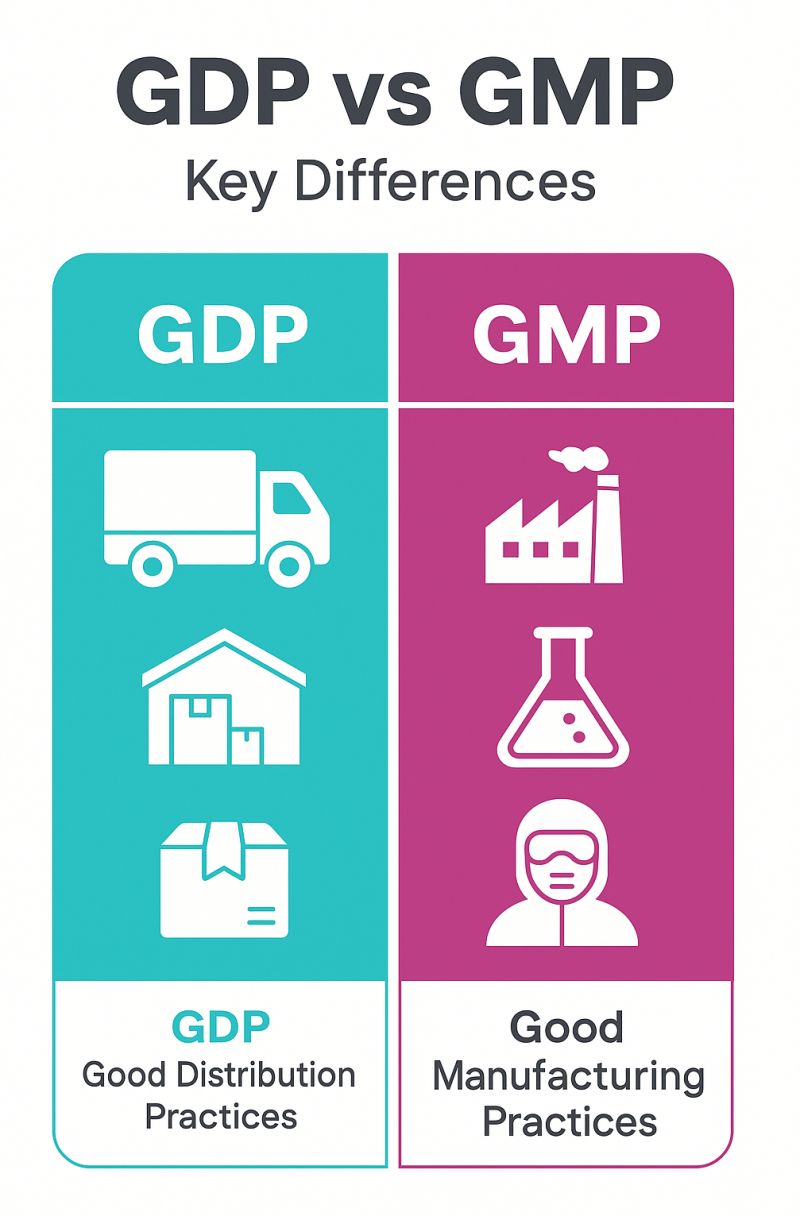
What Are GMP, GLP, and GDP in Pharmaceuticals?
The pharmaceutical industry functions under strict regulatory control because medicines directly affect human health and safety. To ensure that drugs are safe, effective, and of consistent quality, regulatory authorities have introduced structured quality systems. Among these, Good Manufacturing Practice (GMP), Good Laboratory Practice (GLP), and Good Distribution Practice (GDP) are the three most important compliance frameworks followed worldwide.
In India, pharmaceutical companies must follow these practices to meet the requirements of CDSCO, WHO, USFDA, and other global regulators. Although GMP, GLP, and GDP are closely related, each one applies to a different stage of the pharmaceutical lifecycle. Understanding their purpose and scope helps companies avoid compliance gaps and build strong, inspection-ready systems.
These quality standards not only protect patients but also help pharmaceutical businesses grow sustainably. Companies that implement GMP, GLP, and GDP correctly experience fewer deviations, smoother audits, and stronger trust from doctors, distributors, and international clients.
Why quality systems are essential in pharma:
- They ensure medicines are manufactured, tested, and distributed under controlled conditions, reducing risks related to contamination, errors, and product variability across batches.
- They help pharmaceutical companies maintain licenses, pass regulatory inspections, and establish credibility in domestic as well as export markets.
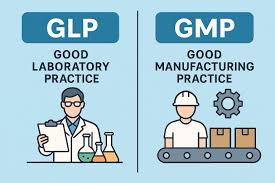
Understanding GMP, GLP, and GDP Separately
Good Manufacturing Practice (GMP)
Good Manufacturing Practice focuses on the manufacturing process of pharmaceutical products. It ensures that medicines are consistently produced according to approved quality standards. GMP covers raw material sourcing, equipment validation, production processes, in-process checks, and final product packaging.
A GMP-compliant manufacturing unit follows documented procedures, employs trained staff, and maintains a clean and controlled environment. This reduces manufacturing risks and ensures that every batch meets predefined quality specifications.
Key aspects of GMP compliance:
- Proper facility layout, qualified equipment, and validated processes that prevent contamination, mix-ups, and deviations during production.
- Detailed documentation such as batch manufacturing records, SOPs, and deviation reports that ensure traceability and regulatory transparency.
Good Laboratory Practice (GLP)
Good Laboratory Practice governs laboratory activities related to testing, analysis, and research. GLP ensures that laboratory data generated during testing is accurate, reliable, and reproducible. It plays a critical role in quality control, stability testing, and preclinical studies.
GLP-compliant laboratories maintain strict control over testing procedures, instrument calibration, and data recording. This ensures that regulatory authorities can trust the test results submitted during product approvals and audits.
Key aspects of GLP compliance:
- Standardized testing methods, calibrated instruments, and trained analysts to maintain precision and consistency in laboratory results.
- Secure data management systems that protect test data from manipulation, loss, or unauthorized access.
Good Distribution Practice (GDP)
Good Distribution Practice applies to the storage, transportation, and distribution of pharmaceutical products. GDP ensures that medicines retain their quality, safety, and efficacy throughout the supply chain until they reach the end consumer.
GDP compliance is essential for wholesalers, distributors, logistics partners, and warehouses. It helps prevent quality degradation, temperature excursions, and the entry of counterfeit medicines into the market.
Key aspects of GDP compliance:
- Controlled storage and transportation conditions with proper temperature monitoring, especially for heat- and cold-sensitive products.
- Complete traceability and documentation systems that track product movement and support effective recalls if required.
Key Differences Between GMP, GLP, and GDP
Although GMP, GLP, and GDP are interconnected, they differ clearly in scope, purpose, and operational responsibility. Each framework addresses a specific risk area within the pharmaceutical value chain and works together to ensure complete quality assurance from product development to patient delivery. Understanding these differences is essential for pharmaceutical companies, third-party manufacturers, laboratories, and distributors to maintain seamless compliance.
GMP primarily focuses on how medicines are manufactured and packaged. It ensures that production processes are consistent, controlled, and reproducible across all batches. Any failure in GMP can directly affect the physical quality of the medicine, making it one of the most critical compliance systems in the pharmaceutical industry.
GLP, on the other hand, focuses on how laboratory data is generated, recorded, and reported. It does not control manufacturing activities but ensures that testing results are accurate, traceable, and scientifically valid. Regulatory authorities rely heavily on GLP-compliant data while approving products, as incorrect or manipulated data can lead to serious safety risks.
GDP governs how finished pharmaceutical products are stored, handled, and transported. Even if a product is manufactured and tested correctly, improper storage or transportation can degrade its quality. GDP ensures that medicines reach distributors, pharmacies, and hospitals in the same condition in which they left the manufacturing unit.
Major differences explained clearly:
- GMP ensures physical product quality during manufacturing by controlling processes, equipment, personnel hygiene, and documentation, whereas GLP ensures scientific accuracy and reliability of laboratory data generated during testing and research activities.
- GDP focuses on maintaining product quality during storage and transportation, addressing risks such as temperature excursions, mishandling, and counterfeit product entry into the supply chain.
Operational responsibility under each system:
- Manufacturing, production, and quality assurance teams are responsible for GMP compliance, including process validation, batch records, and deviation management.
- Quality control, analytical, and research teams operate under GLP to maintain test accuracy, method validation, and data integrity.
- Warehousing, logistics, and distribution teams follow GDP guidelines to ensure proper storage conditions, transport monitoring, and complete traceability.