What Is an API in Pharmaceuticals?
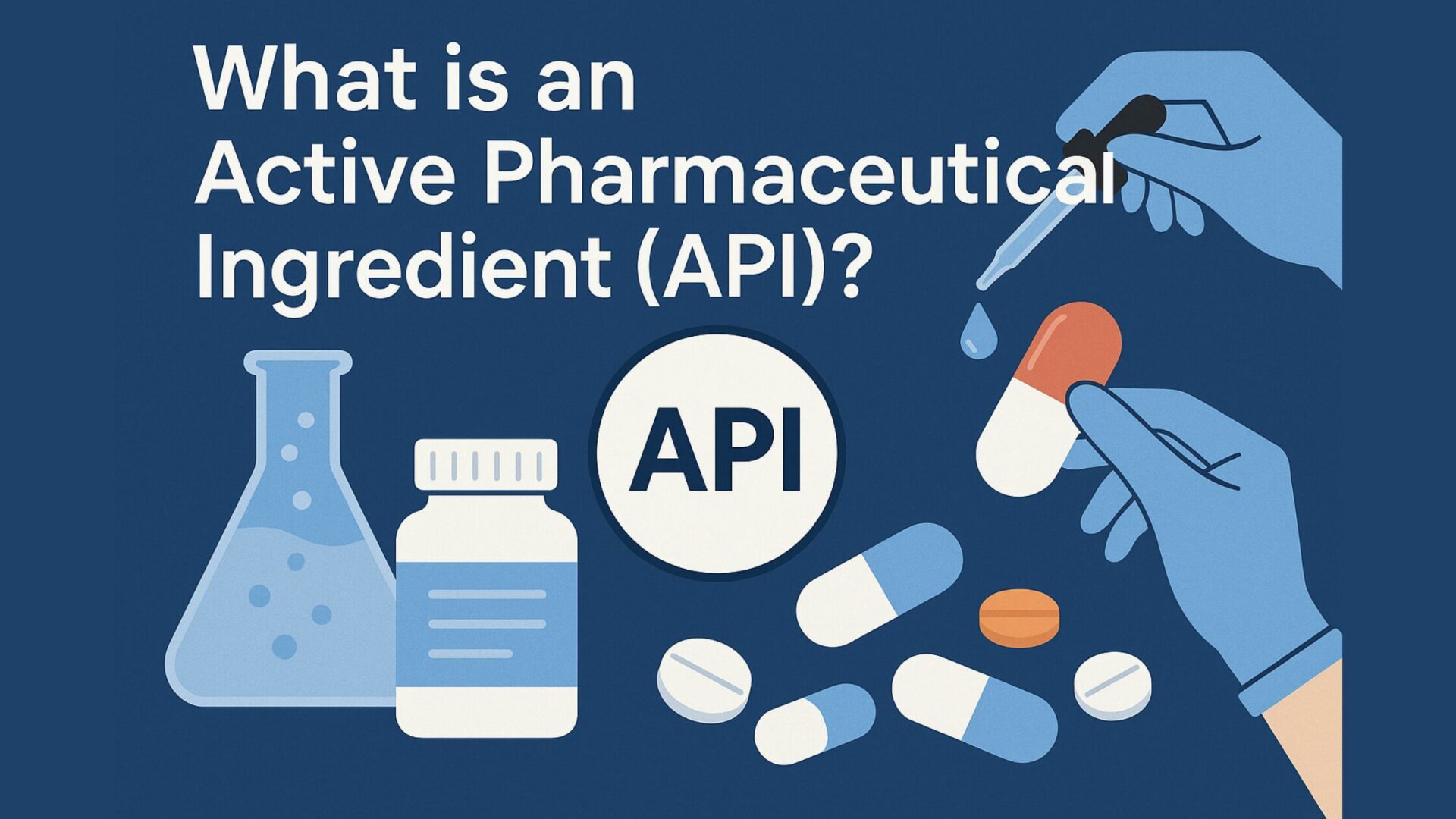
Every medicine used in modern healthcare relies on one fundamental component that delivers its therapeutic effect: the Active Pharmaceutical Ingredient (API). While patients often recognize medicines by their brand names or dosage forms such as tablets, capsules, or syrups, the real medical action occurs because of the API contained within the formulation.
An API is the biologically active substance responsible for producing the intended effect in the body. Whether the goal is to reduce pain, control infection, manage chronic disease, or support recovery, it is the API that interacts with biological systems to achieve this outcome. Without an API, a medicine would consist only of inactive substances with no therapeutic value.
Despite their importance, APIs often remain behind the scenes. The pharmaceutical industry invests heavily in research, development, and quality control of APIs because even the smallest variation in composition can significantly impact drug safety and effectiveness. APIs are therefore treated as the scientific backbone of pharmaceutical development.
Understanding APIs is essential not only for manufacturers but also for regulators, healthcare professionals, and informed patients. APIs influence drug performance, regulatory approval, global supply chains, and overall healthcare reliability. This blog explores what APIs are, how they are developed and manufactured, how they differ from finished dosage forms, and why they are increasingly important in the global pharmaceutical ecosystem.

What Is an API and Why It Matters in Pharmaceuticals
Understanding Active Pharmaceutical Ingredients
An Active Pharmaceutical Ingredient is the substance in a drug product that is responsible for its pharmacological activity. In a finished medicine, the API works alongside excipients, which are inactive components used to aid delivery, stability, taste, or appearance.
For example, in an antibiotic tablet, the API is the compound that fights infection, while excipients help bind the tablet, control release, or protect the API from degradation. Regardless of the dosage form, the API defines the medicine’s therapeutic purpose.
APIs can be derived from chemical synthesis, fermentation, biological processes, or natural sources. The origin and complexity of the API determine how it is manufactured, tested, and regulated.
Why APIs Are Central to Drug Effectiveness
The effectiveness of any pharmaceutical product depends directly on the quality of its API. A medicine may be well-packaged and properly labeled, but if the API is impure, unstable, or inconsistent, the drug may fail to deliver its intended benefit.
APIs determine the strength, duration of action, and safety profile of a medicine. They also influence how the drug is absorbed and metabolized in the body. This is why APIs are subject to strict quality standards and regulatory oversight worldwide.
Different Types of APIs Used in Medicines
- Synthetic APIs: These APIs are produced through controlled chemical reactions. They are widely used in conventional medicines due to their consistency, scalability, and predictable behavior.
- Semi-Synthetic APIs: Semi-synthetic APIs originate from natural sources but are chemically modified to enhance effectiveness or stability. This approach combines natural origins with scientific refinement.
- Biological APIs: Produced using living organisms, biological APIs are commonly used in advanced therapies. They require specialized manufacturing and storage conditions due to their complexity.
- High-Potency APIs: These APIs are effective at very low doses and are used in treatments such as oncology or hormonal therapies. Their handling requires advanced containment and safety controls.
API Development, Manufacturing, and Quality Control
How APIs Are Developed and Manufactured
API development begins with scientific research to identify compounds capable of producing a desired therapeutic effect. Once a compound is identified, it undergoes extensive laboratory testing before moving into large-scale manufacturing.
API manufacturing is a precision-driven process. Each stage is carefully monitored to ensure that the final product meets strict quality, purity, and consistency standards. Any deviation can affect patient safety and regulatory compliance.
Key Stages in API Manufacturing
- Raw Material Selection
The quality of an API starts with the selection of raw materials. These materials must meet predefined purity and safety specifications to ensure that no harmful contaminants enter the process.
- Chemical or Biological Synthesis
During synthesis, raw materials are transformed into the active compound through controlled reactions or biological processes. Strict control is required to ensure uniformity and reproducibility.
- Purification and Isolation
After synthesis, the API is purified to remove impurities and by-products. This step ensures that the API meets regulatory purity limits and performs consistently in medicines.
- Crystallization and Drying
Crystallization helps achieve uniform particle size and stability, while drying removes residual solvents or moisture. Both steps are essential for maintaining shelf life and performance.
- Quality Testing and Validation
Each API batch undergoes comprehensive testing to confirm identity, strength, purity, and stability. Validation ensures that every batch meets the same quality standards.
Quality and Regulatory Expectations for APIs
APIs are regulated under strict international guidelines because they directly affect patient health. Manufacturers must maintain detailed documentation, traceability of materials, and validated processes.
Quality systems ensure batch-to-batch consistency and long-term stability. APIs that do not meet regulatory requirements cannot be used in finished pharmaceutical products.
APIs vs Finished Dosage Forms, Industry Importance, and Conclusion
Difference Between APIs and Finished Dosage Forms
APIs and finished dosage forms serve different but complementary roles in pharmaceuticals. The API delivers the therapeutic effect, while the dosage form ensures safe, effective, and patient-friendly delivery.
Finished dosage forms include tablets, capsules, syrups, injections, and topical products. These formulations are designed to optimize how the API is absorbed and utilized by the body.
Key Differences Explained
- Functional Purpose
The API treats the disease, while excipients support delivery, stability, and patient usability. Without excipients, many APIs could not be administered effectively.
- Manufacturing Focus
API manufacturing prioritizes chemical purity and precision, whereas formulation manufacturing focuses on dosage accuracy, release profile, and patient convenience.
- Regulatory Oversight
APIs are evaluated for purity, stability, and safety, while finished products must also meet bioavailability, labeling, and packaging standards.
Why APIs Matter Beyond Manufacturing
APIs influence medicine affordability, availability, and global supply stability. Any disruption in API production can lead to shortages of essential medicines.
Healthcare providers rely on API consistency to ensure therapeutic equivalence, especially when prescribing generic medicines. Regulators depend on API transparency to maintain drug safety.
Future Trends in API Development
- Increased Focus on Advanced APIs: The industry is moving toward complex and high-potency APIs that enable targeted therapies and personalized medicine.
- Expansion of Biologic APIs: Biologic and biosimilar APIs are becoming more common, particularly in treatments for chronic and life-threatening diseases.
- Strengthening Global Supply Chains: Manufacturers are investing in diversified and resilient API supply chains to reduce dependency and prevent shortages.
Conclusion
Active Pharmaceutical Ingredients are the scientific foundation of every medicine. They determine how drugs work, how effective they are, and how safe they remain throughout their lifecycle. Although often unseen by patients, APIs represent the most critical element of pharmaceutical development.
Understanding APIs provides deeper insight into medicine quality, regulatory compliance, and healthcare reliability. As pharmaceutical science continues to evolve, APIs will remain central to innovation, patient safety, and global health outcomes.
Explore Related Blogs
Stay informed with our curated selection of similar blogs, offering expert perspectives on pharmaceutical trends, regulatory updates, and product innovations.
These articles are designed to help healthcare professionals, partners, and businesses stay ahead in an ever-evolving industry. Explore more to deepen your knowledge and make informed decisions.